Jewelry Styles Through the Ages – From Ancient Times to Today

Jewelry Styles Through the Ages – From Ancient Times to Today
Jewelry has always been more than decoration. It tells stories of culture, faith, power, and personal identity. From the first beads made of shells and stones to today’s minimalist and sustainable designs, jewelry has evolved alongside human civilization. Here’s a look at how jewelry has reflected and shaped our history through the ages.
Ancient Symbols and Sacred Meanings
In ancient times, jewelry was deeply connected to spirituality and protection. In Egypt, both men and women wore gold, lapis lazuli, and turquoise as symbols of divine power and as charms against evil. Amulets shaped like scarabs or the Eye of Horus were believed to bring luck and strength.
Across Mesopotamia and Persia, jewelry signified wealth and social rank, while the Greeks and Romans developed more naturalistic designs—leaves, animals, and gods—crafted in gold and silver. These pieces were not only beautiful but also expressions of identity and influence.
The Middle Ages: Faith and Splendor
During the Middle Ages, jewelry reflected both religious devotion and social hierarchy. Nobles adorned themselves with heavy gold pieces set with gemstones, while the church used jewelry to emphasize the sacred—crosses, reliquaries, and brooches with biblical motifs were common.
For ordinary people, jewelry was simpler, often made of bronze, tin, or glass beads. Many pieces served as talismans believed to ward off illness or misfortune. This era also saw the rise of skilled goldsmiths, whose craft became central to urban life and trade.
The Renaissance: Art and Individuality
The Renaissance brought a new appreciation for art, science, and personal expression. Jewelry became more intricate, inspired by nature, mythology, and the expanding world. Diamonds and colored gemstones gained popularity, and portrait jewelry—lockets or medallions with miniature images of loved ones—became fashionable among the wealthy.
Jewelry was no longer just a symbol of status; it became a reflection of taste, intellect, and individuality. This was the beginning of jewelry as a true form of personal style.
The 18th and 19th Centuries: Romance and Industry
In the 18th century, jewelry design became lighter and more elegant. The Rococo style favored soft curves, floral motifs, and pastel tones, often featuring pearls and diamonds. Later, during the Victorian era, jewelry took on a sentimental tone. Pieces incorporated hair or miniature portraits of loved ones, and motifs like hearts, flowers, and bows symbolized affection and remembrance.
The Industrial Revolution transformed jewelry production. New techniques and materials made fine jewelry accessible to the growing middle class. What was once reserved for the elite became part of everyday life, marking milestones and personal stories.
The 20th Century: From Art Nouveau to Modern Minimalism
The 20th century saw an explosion of creativity. Around 1900, Art Nouveau celebrated organic forms and flowing lines, often using enamel and natural themes. The 1920s and 1930s brought Art Deco, with its bold geometry, symmetry, and contrasts of black, white, and gold—perfect for the glamour of the Jazz Age.
After World War II, new materials like plastic, aluminum, and stainless steel entered jewelry design. American designers such as Tiffany & Co. and later independent artisans helped define modern elegance. Jewelry became a statement of individuality and innovation rather than just wealth.
Contemporary Jewelry: Sustainability and Storytelling
Today, jewelry is more diverse than ever. Some prefer timeless gold and silver pieces, while others embrace handmade or upcycled materials. Sustainability and ethical sourcing have become key values, with many consumers seeking transparency about where their jewelry comes from.
Modern jewelry often carries personal meaning—a family heirloom, a symbol of a life event, or a reminder of a journey. Whether minimalist or bold, jewelry today is about self-expression and authenticity.
Læs også:
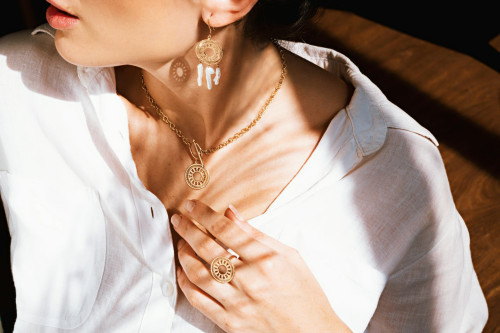

A Timeless Reflection of Humanity
From ancient amulets to contemporary design, jewelry has mirrored human history—our beliefs, emotions, and creativity. It has endured through changing fashions because it fulfills a universal desire: to express who we are, to remember what matters, and to add beauty to our lives.
Jewelry styles through the ages are not just a story of fashion—they are a story of humanity itself.
Læs også: